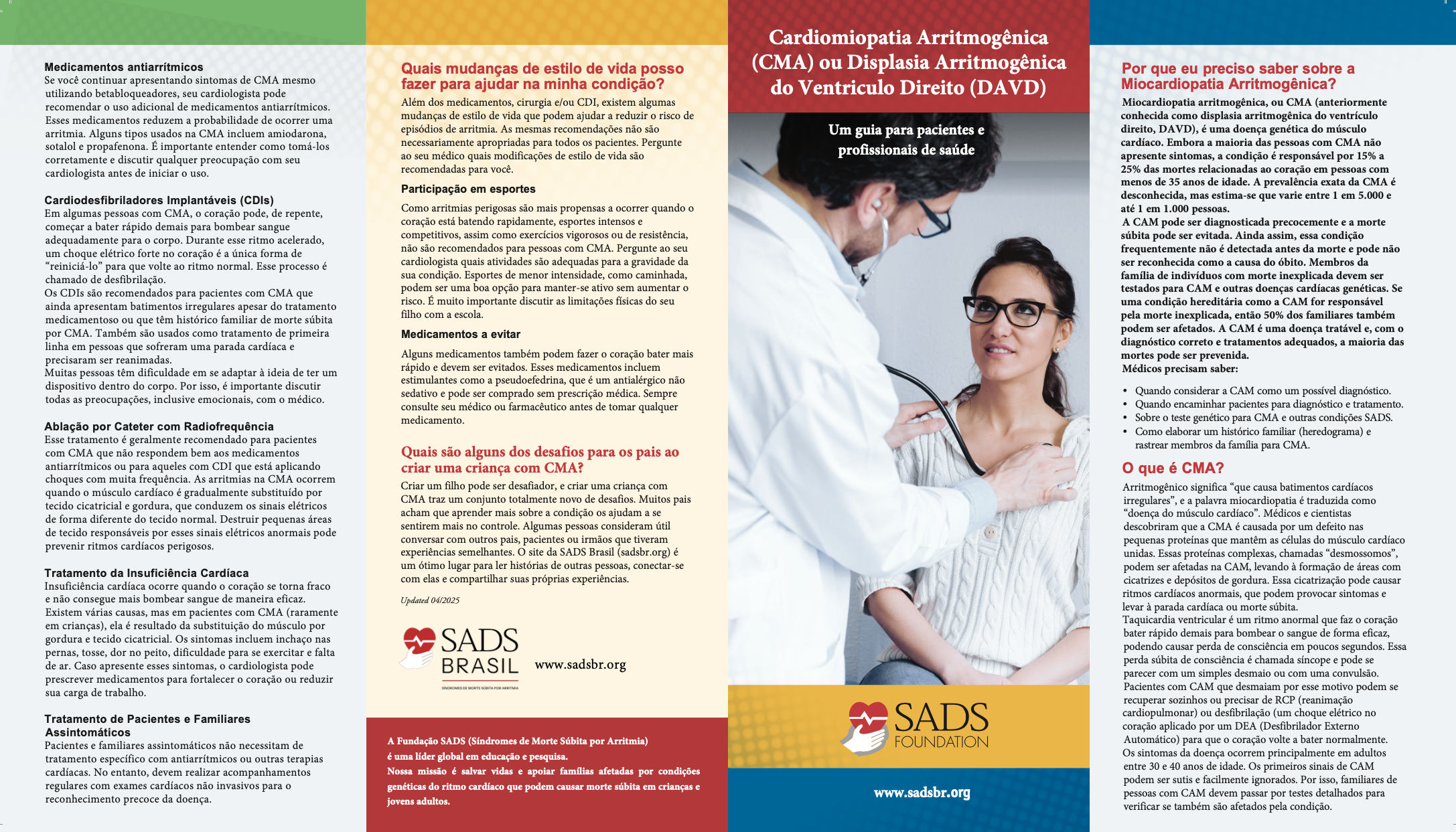
Arrhythmogenic Right Ventricular Dysplasia (ARVD), or Arrhythmogenic Right Ventricular Cardiomyopathy (ARVC) is a genetic disease of the heart muscle.
Although most of those with ARVC do not show any symptoms, the condition causes 15%-25% of heart-related deaths in people under 35. The exact prevalence of ARVC is unknown, but is estimated to be between 1 in 5000 to as high as 1 in 1000 people.
About
Arrhythmogenic means "causing the heart to beat irregularly," and the word cardiomyopathy is translated as "heart-muscle disease." ARVC is caused by a defect in the tiny proteins that hold the heart muscle cells together. These complex proteins, or "desmosomes," can be disrupted in ARVC, leading to areas of scar and fat deposits. The right ventricle is more susceptible to this damage, though the left ventricle can also be involved. These areas of scarring can lead to abnormal heart rhythms which can cause you to become symptomatic or cause sudden cardiac arrest or death.
Download our new ARVC Syndrome Fact Sheet that helps explain your condition to family, friends, and your community!
Symptoms
The most common age of presentation is in the 30's, however ARVC may present as young as early teenage years to over 70. Therefore symptoms at any age should be evaluated. Symptoms include heart palpitations and fainting after physical activity or exercise.
You may experience any one or more of the following symptoms:

Palpitations

Syncope

Light-headedness

Chest pain
Cardiac arrest
One type of rapid heartbeat is called ventricular tachycardia. When ventricular tachycardia occurs, the heart is beating too fast to pump blood effectively out of the heart. As a result, the brain does not receive enough blood and you may lose consciousness within seconds. This sudden loss of consciousness is called syncope and it may look like a simple faint or like a seizure.
Diagnosis
The diagnosis of ARVC can be complicated and is made using a combination of cardiac tests and interpretation of changes in each, based on criteria known as the Revised Task Force Criteria.
Cardiac tests and exams include:
- An electrocardiogram (ECG), which records your heart rate and rhythm
- A 24-hour heart rhythm monitor
- An echocardiogram, which shows the structure and function of your heart
- A cardiac MRI, which provides detailed pictures of the inside of your heart. The MRI is now becoming the "gold standard" for diagnosis.
Genetic testing is now available for ARVC and can be ordered through any genetics laboratory. Ask your doctor about whether genetic testing is right for you.
At this time, genetic mutations in one of the genes known to cause ARVC are found in approximately 50% of people diagnosed with ARVC.
ARVC is inherited in an autosomal dominant pattern, meaning that each child (male or female) has a 50% risk of inheriting a genetic mutation for ARVC from an affected parent. Because of the 50% risk to children, all first-degree relatives of someone with ARVC should undergo cardiac screening for ARVC including an ECG, 24 hour monitor and an echocardiogram at the time of diagnosis.
Treatment
The goal of ARVC treatment is to control heart rhythms and prevent complications. Your doctor may recommend the following:
Beta-Blockers
The first-line medication for ARVC is a beta-blocker. This is a class of drug that may reduce heart rate, lower blood pressure and may protect you from dangerous heart rhythms.
Anti-Arrhythmic Medications
If your heart rhythm is not well-controlled with beta-blockers, your doctor may prescribe additional medication to keep your heart beating in a normal rhythm.
Radio Frequency Catheter Ablation
In some cases, doctors may recommend radio frequency catheter ablation. This is where very small catheters are placed from a vein through the skin and into the heart in order to destroy the area of the heart causing the dangerous arrhythmia.
Implantable Cardioverter Defibrillators (ICDs)
Your doctor may recommend the placement of an ICD (or Implantable Cardioverter Defibrillator).
This is a tiny device placed under the skin in your chest that continuously monitors your heart rate and rhythm. If a life-threatening arrhythmia is detected, the ICD delivers an electric shock to restore your heart to a normal heart rhythm.
Participation in Sports
If you have a diagnosis of ARVC you should not participate in competitive sports. Speak to your doctor about whether regular exercise is safe for you. ARVC can worsen with exercise and in most cases, your doctor will recommend restriction from all intense forms of exercise.